
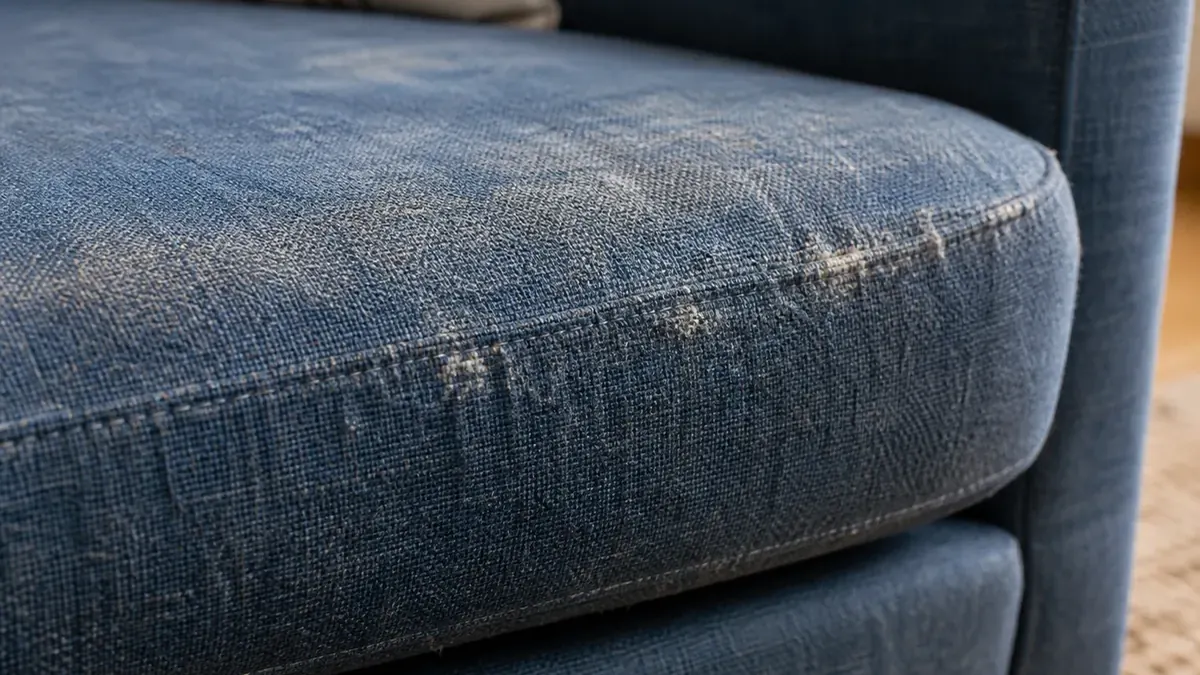
One sofa in discolored fabric does not necessarily find its color after cleaning. If its dull appearance comes from deposits, a compatible method can improve; if the shade has disappeared or if the fibres are worn, the result will be different. Check out our service of cleaning sofas and textiles to clarify what can be cleaned and the limits to be set. This distinction avoids multiplying the products on a brand that is not part of the detachment.
"Reveal Color": an expression to be specified
In common language, reviving a sofa can mean removing dust, reducing fat traces, improving homogeneity or regaining a missing tint. These objectives are not equivalent. A cleaning estimate should explain which is being considered. An attractive photo and a promise of a "new shot" are not enough to demonstrate that a change of colour will be reversible on your furniture.
Removing a deposit can make the tissue visually less dull. This does not mean that the cleaning has recreated its coloration. Conversely, a seat can be clean and keep a pale area, a difference in shine or an abrasion. So the right question is not just "what product to use?", but "what changes the appearance of the fabric?" The examination of the furniture precedes the choice of the method.
Several phenomena can also overlap. A armrest exposed to the sun can be both washed and cracked by use. Cleaning can affect part of the problem without making the tint perfectly uniform. This possibility must be explained before intervention. A precise limit allows informed decision-making and then compares the result to a realistic objective.
The clues to observe without damaging the couch
Where is the difference in appearance?
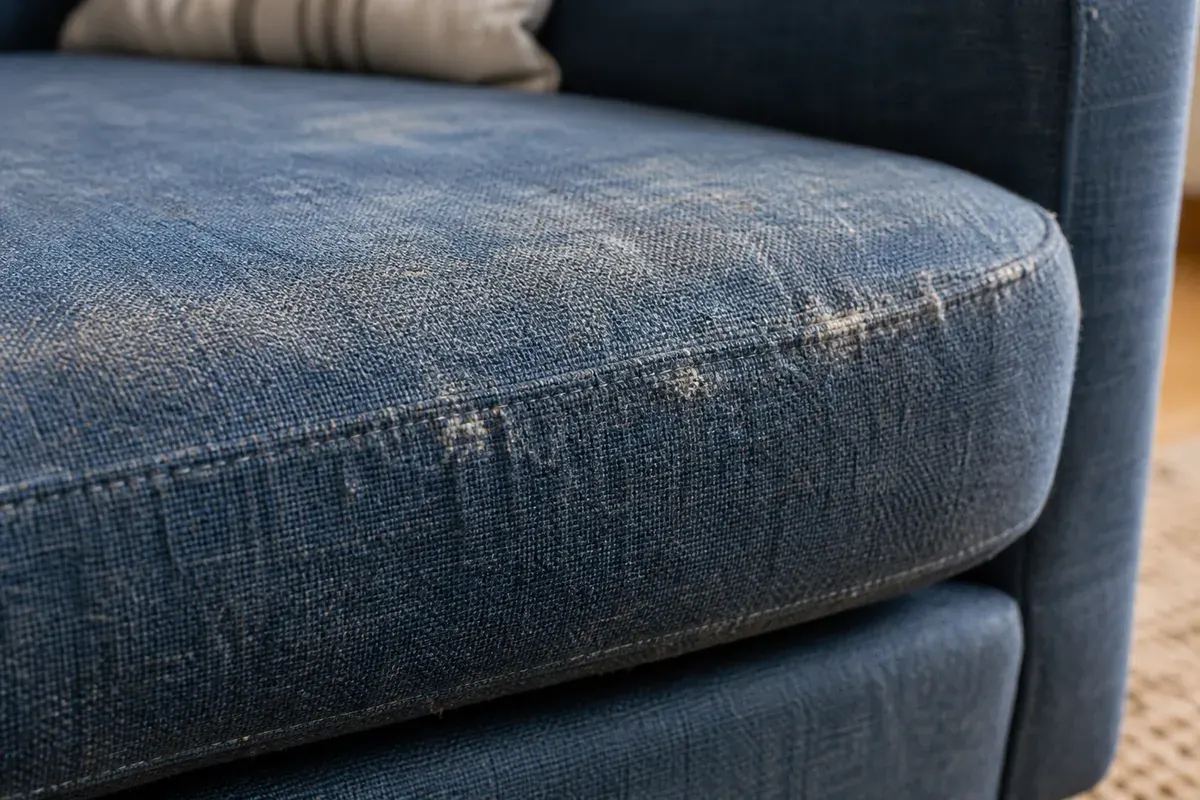
Find out if it concerns contact areas, areas exposed to a window, the edge of the cushions or an old spot. A use-related distribution can direct the examination to soiling or wear. A difference between protected and exposed areas may evoke the effect of light. These observations remain clues: they alone do not prove the cause of change.
Look at the furniture in diffuse natural light and under its usual lighting. The orientation of the hair and the angle of view may change the perception of certain textiles. A flash photograph can accentuate or mask a contrast. Avoid comparing a very bright image on one side and a dark image on the other: they are not a reliable measure of color.
Since when is the brand present?
A progressive evolution, a localized accident and a brand that appeared after an attempt to clean up tell different stories. Note the known events: moving the sofa, recent exposure to a window window, changing the cover, overturned product or domestic staining. Even if you don't know the exact date, a chronological order helps to examine the assumptions without assigning everything to dirt.
Photograph the area before a new operation. Keep the names of the applied products and instructions of the furniture. Do not rub harder simply to see if the brand disappears: an improvised test can create an additional difference. If the tissue seems already weakened, stop attempts and ask for a review adapted to its material and condition.
Landing, discolouration and wear: a tracking table
| Observation | Assumption to be considered | What a cleaning can reasonably aim for |
|---|---|---|
| A dull aspect of areas often affected | Use deposits, sometimes associated with wear and tear | Remove dirt compatible with the chosen method |
| Exposed Party clearer than a protected area | Alteration of the tint, effect of exposure | Clean the deposits present, without promising a recoloration |
| Clear mark after product | Reaction of dyeing or coating | Evaluate residues and damage prior to action |
| Flattened fibres, glossy or abrased surface | Physical modification of textiles | Clean with caution; wear may remain visible |
| Aureole after local cleaning | Residues, migration or other media reaction | Identify the possible cause and limitations of a recovery |
| Difference according to angle of view | Hair orientation or the optical effect of the fabric | Examine the recommended maintenance before concluding a stain |
This table helps to prepare an application; it does not replace a diagnosis. Two similar marks may have different causes. A satisfactory method on the sofa of a relative can therefore be inappropriate to yours, even if the general color seems the same.

Sun and products: why a color can remain altered
The position of the furniture in the room counts for its maintenance. Direct and prolonged exposure may affect the appearance of certain coatings. The Roche Bobois maintenance guide recalls the importance of exposure conditions and instructions adapted to materials. For your sofa, always consult the recommendations of the manufacturer and the collection concerned, rather than a general rule deducted from another material.
A detaching product may also affect a dye or finish. The fact that it is common, sold for the house or presented as natural does not demonstrate its compatibility with the sofa. The concentration, application mode and products already present also come into play. Mixing recipes found on several sites does not allow better control of the result.
I'm not sure what I'm doing.maintenance item fromIKEA on fabric sofas indicates in particular that bleach can remove the color of the fabric. An area thus altered shall not be treated as a simple soil to be dissolved. Report the product used and ask for an evaluation before another attempt. The aim is to avoid extending the mark or further weakening the coating.
What a professional cleaning can do
Remove deposits on compatible textile
When soiling is identified and the coating accepts the proposed process, cleaning may be aimed at removing deposits and improving the general aspect. The result depends on the nature of the materials present, their seniority and the condition of the fabric. This objective must be distinguished from a guarantee of removal of any trace, which would be too wide without examination of the furniture.
The professional must define the surfaces concerned: separate seats, backrests, armrests, sides or cushions. Cleaning only a small area can sometimes accentuate the contrast with the rest of the sofa. This does not automatically justify processing everything; it requires explaining the choice of perimeter. The user must understand why a localized recovery or wider cleaning is proposed.
Clarify brands that may remain
A useful assessment also identifies limitations. A loss of tint, abrasion, a hook or damaged finish are not all part of the cleaning process. A trace can decrease without disappearing. A partial result may be satisfactory if this objective has been agreed, but it must not be presented as a complete restoration of the sofa.
Ask for significant reserves to be included in the prior exchange or estimate. A vague formula such as "subject to reservation" is less useful than a localized explanation: exposed armrest, old stain already treated, fragile fabric on the seam. This precision also helps to assess the result after drying, when the colour and touch can be examined under comparable conditions.
Pre-test and label reading
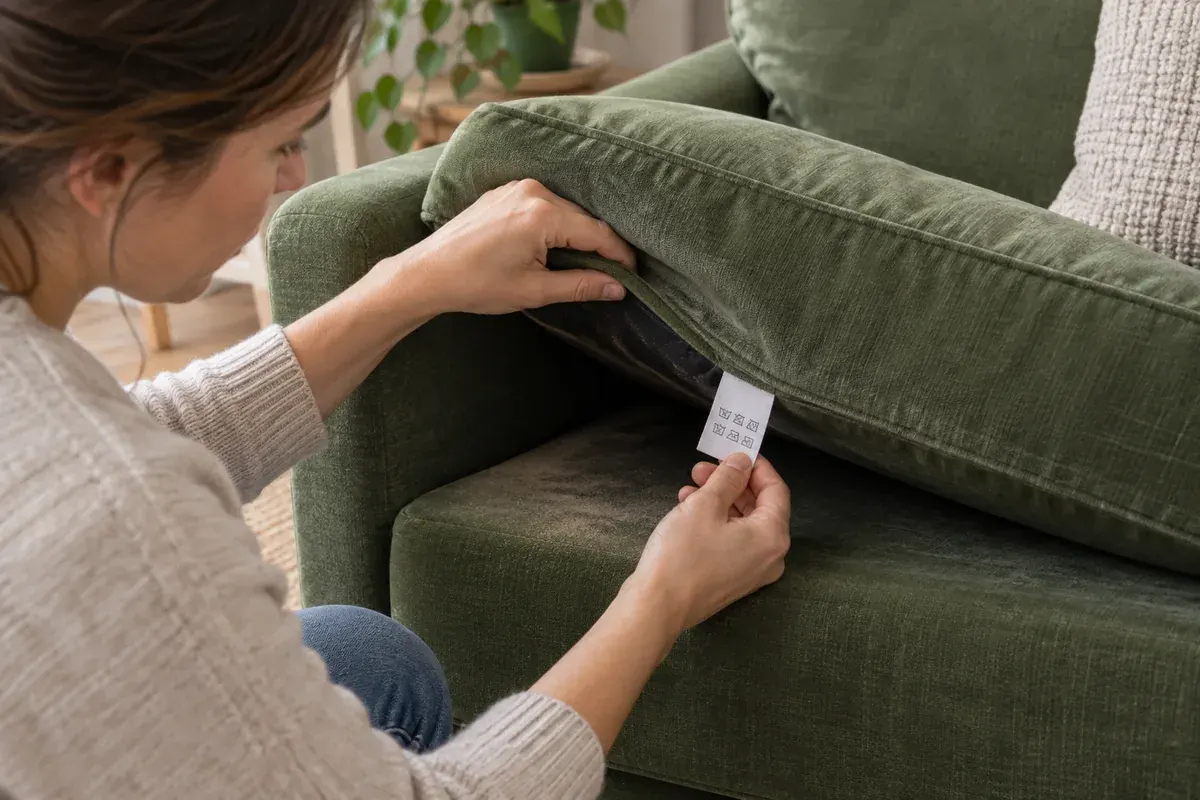
The reference of the furniture and its maintenance instructions are priority information. A zipper does not necessarily mean that the cover supports machine washing. A fabric attached to the sofa may require different precautions than a decorative cushion placed on it. Collect the instructions for each element when several materials make up the set.
A discrete test may help to observe the reaction to a proposed method. It should not be confused with automatic authorization to process all parts of the furniture. A hidden area may have been less exposed and less worn than the seat. The test must therefore be interpreted with the other observations, without promising that a local result will be the same everywhere.
The maintenance advice from Roset Line In particular, it is recommended to check the recommended product on a non-visible part, as some products may discolor the fabric. This recommendation should be linked to the sofa's specific instructions. If you don't have the right product or instructions, a new home experiment is not a mandatory step before you ask for advice.

Cleaning, dyeing or cover replacement?
Cleaning removes dirt; a recoloration seeks to modify or restore a tint; a new cover replaces the accessible coating. These solutions do not meet the same need and do not have the same constraints. Before choosing, also examine the solidity of the structure, the condition of the garnishing and your wish to keep the furniture. An expense on the color does not have the same interest if the sofa has other important defects.
A dye should not be presented as a simple and universal solution for a mounted sofa. Fibre composition, seams, non-demountable parts and processing conditions count. The result may be different from one element to another. If you are considering this track, talk to a specialist who can explain the feasibility and limitations of the coating.
Cover replacement can be an option when the manufacturer offers an appropriate reference. Check the exact model, dimensions and elements included. A cover compatible with a visually close sofa may not fit your version. When the coating is fixed, a upholsterer may examine a repair. These possibilities are to be discussed separately with a cleaning quote: they are not included by default.
Three examples of reasonable decisions
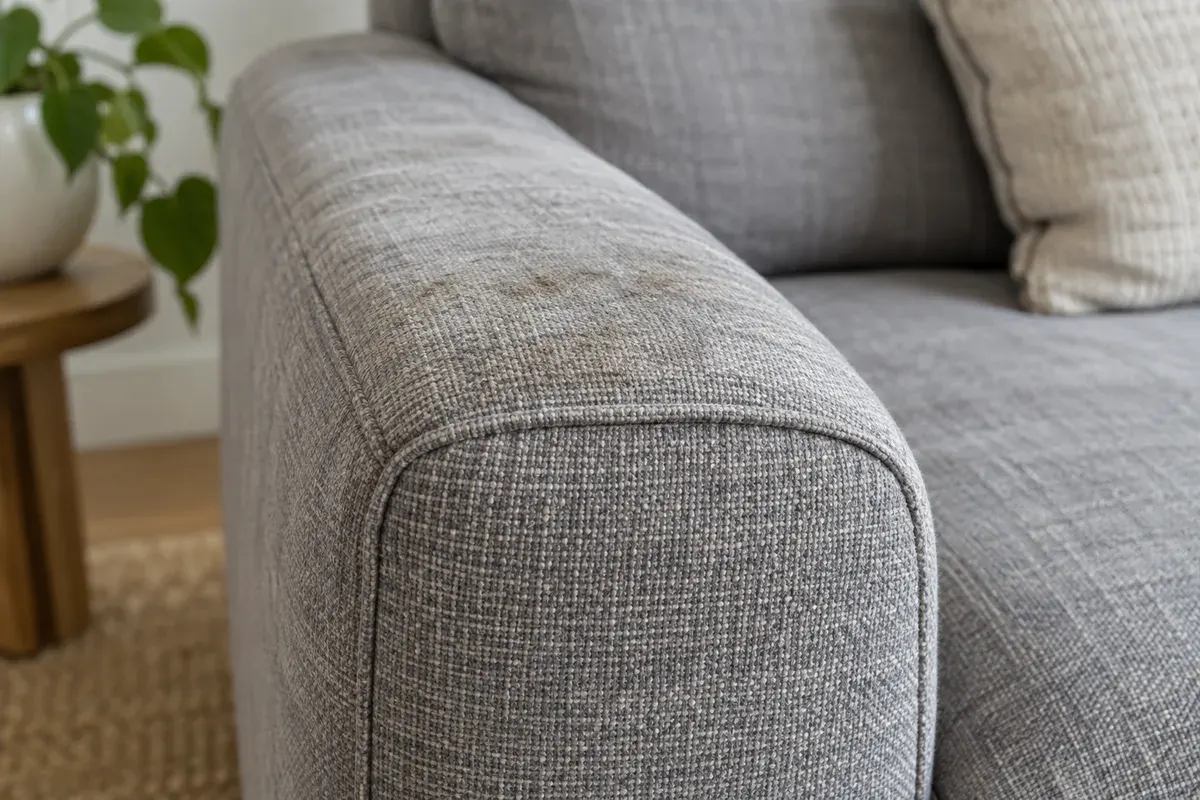
Greyish armrests on a light sofa. The areas that are often affected are more dull, but there is no visible tear in the textile. The professional examines deposits, past attempts and the compatibility of cleaning. The objective may be to improve the overall aspect. It remains necessary to check whether part of the contrast corresponds to a wear that will remain after the intervention.
Lighter blue folder on the window side. The difference follows the exposure zones and has become more pronounced over time. Cleaning may be useful for the maintenance of the furniture, but the discussion should focus on the possible persistence of the loose colour. A direct exposure protection and, depending on the possibilities of the model, a cover replacement can enter into the reflection.
Pale mark after a stripper. The occupant knows the product used and the area concerned. Before repeating the application, it transmits this information and the sofa leaflet. The assessment seeks to distinguish residues, soil removal and colour alteration. If the tint has been affected, a simple additional staining should not be sold as a recoloration.
These situations are pedagogical examples. They do not describe services performed by Speed 3D Services and do not predict the result of remote processing.
Prepare the application and compare the offers
Send a picture of the entire sofa, a close view of the marks and a picture of the label. Indicate the municipality, approximate dimensions, known age of furniture and products already tested. Above all, describe your goal: remove dirt, reduce a contrast or regain a color. This formulation allows you to quickly check whether the proposed service meets your expectations.
Then compare equivalent perimeters. A cleaning of the seats is not the same as a treatment of all the faces and decorative cushions. Check the reserves, the organization of drying and the methods of checking the result. A very general promise associated with a low price does not make it possible to understand what will really be taken care of.
During the reception, observe the sofa after the planned drying and in a lighting comparable to that of the initial observation. An image taken with a filter, under another light or on a still damp fabric can give a misleading impression. The most useful point of comparison remains the agreed objective, combined with consistent photos and areas specified before intervention.

Frequently asked questions
Does steam cleaning render the original color?
We mustn't promise it. Steam is a cleaning process whose compatibility must be verified. It does not automatically recreate an altered dye. To understand the choice of method, consult our comparative steam and injection-extraction, which deals with cleaning and its limits.
Can a clean sofa still look stained?
Yes, its appearance may remain marked by wear, a change of colour or an old reaction to the product. What remains must then be explained rather than multiplying the passages without a specific objective. An examination after drying helps to distinguish the final state from a temporary moisture effect.
Can we clean only the discolored part?
It depends on the cause and the coating. If the shade is lost, cleaning this part only does not restore it. If deposits are present, a localized intervention should take into account the risks of contrasting the rest. The perimeter is decided after examination, not after the colour of the mark only.
How can we limit new differences in appearance?
Respect the manufacturer's maintenance, regularly remove dust according to his recommendations and avoid improvised products. Examine the direct exposure to light and the protection possibilities of the room. When an incident occurs, identify the spilled product and ask for a compatible method before trying several successive stain removers.
Useful links and contact
| Resource | For what purpose? |
|---|---|
| Cleaning sofas and textiles | Present your furniture and request an evaluation |
| Vacuum or injection-extraction | Understand methods without confusing cleaning with recoloration |
| Rent a shampoo or have your carpet cleaned | Compare rental and a service according to textile |
| Contact and estimate | Specify your needs, access and desired result |
Contact Speed 3D Services on 04 26 84 07 35 or 06 44 68 80 08, or by e-mail to info@speed-3d-services.com. A precise description of the brand and the old attempts allows us to discuss a useful service, with expectations adapted to the real state of the sofa.